Blender, Gaussian Splats, Programming, and Manufacturing
An intersection of technical and creative skills
Ongoing
I picked up Blender originally out of an interest in VFX, following YouTubers like FreddyWong and Corridor Digital. I have been able to apply it during my undergraduate studies, creating an animation for a physics class and later using it for modeling and 3D-printing for circuit enclosures and robotics projects. After graduation, I still use Blender for rendering computer-vision projects and even making my own tools in the workplace.
(Not So) Simple Harmonic Motion
For a UCSD mechanics course, I created an animation to depict pendulum and spring systems to teach simple harmonic motion, working its way up to advanced topics like coupled-spring systems. Most of what I know about Blender came from working on this project and learning as I went. From beginning to end of the animation, I transitioned from manual key-frame animating to utilizing math-nodes and creating workflows for each section of the video. While the full, edited video had been lost (edited to overlay equations and comments on the animation), below is the raw snippet of the coupled-spring system, using math nodes to animate its chaotic motion according to derived equations of motion. The full video, with a few looping sections, was approximately three minutes long.
Gaussian splats
Improvised Computer, UC Davis
Entering Fall-quarter in UC Davis, I didn't have a laptop, but using leftover electronics from my side-projects in UCSD, I connected an old Raspberry Pi to an LCD screen and designed a back-plate to keep it safe. Altogether, with a folding keyboard, this micro-laptop carried me through the quarter, even being used for coursework connecting to high-performance cloud computing resources and submitting molecular simulations via SSH.
To create the back-plate, I scanned the back of the computer (above) and scaled the scene in Blender using the calipers (right of the computer) as a physical reference. The resulting models were 3D-printed 1-to-1 with their digital counterparts.
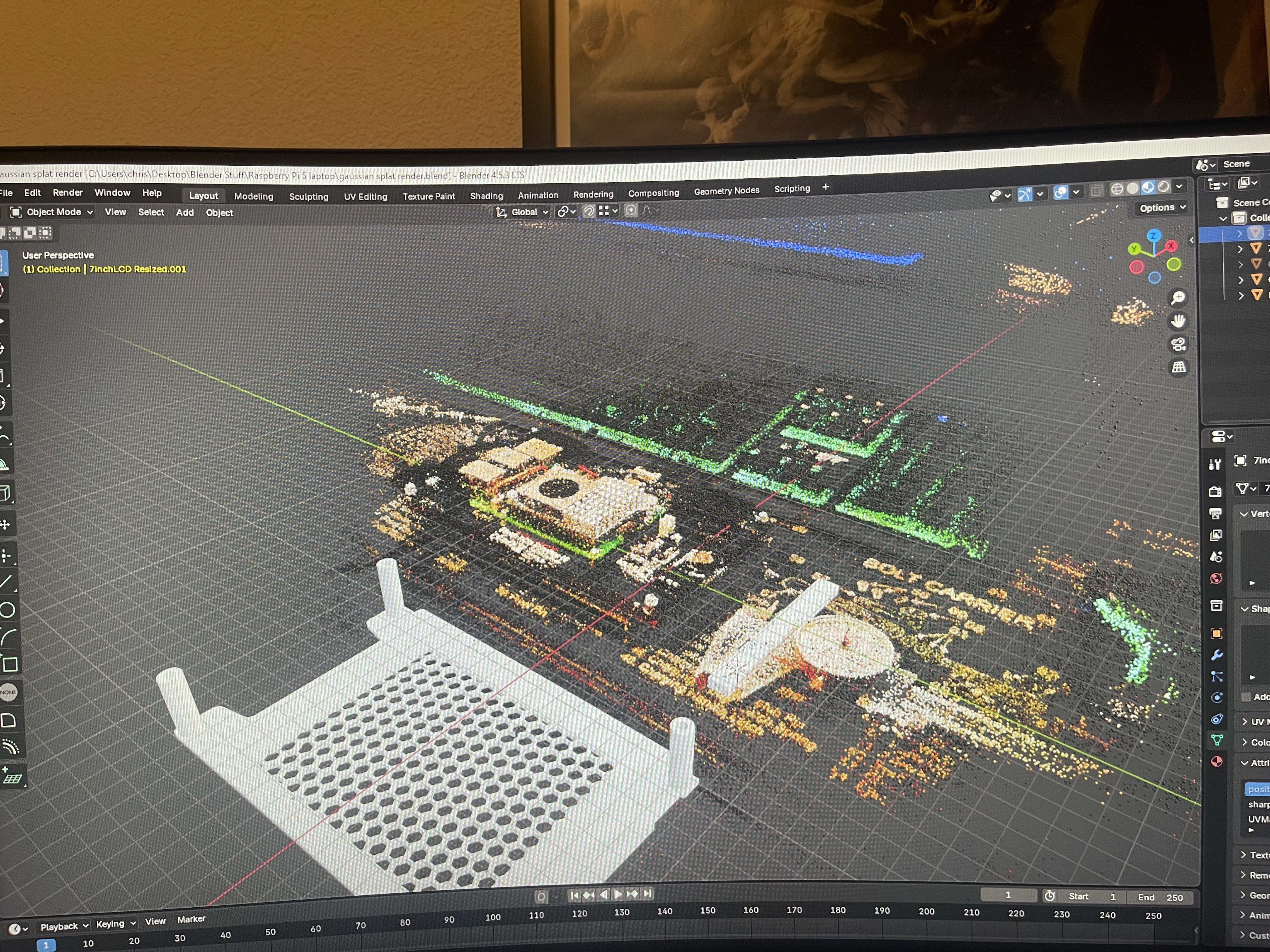
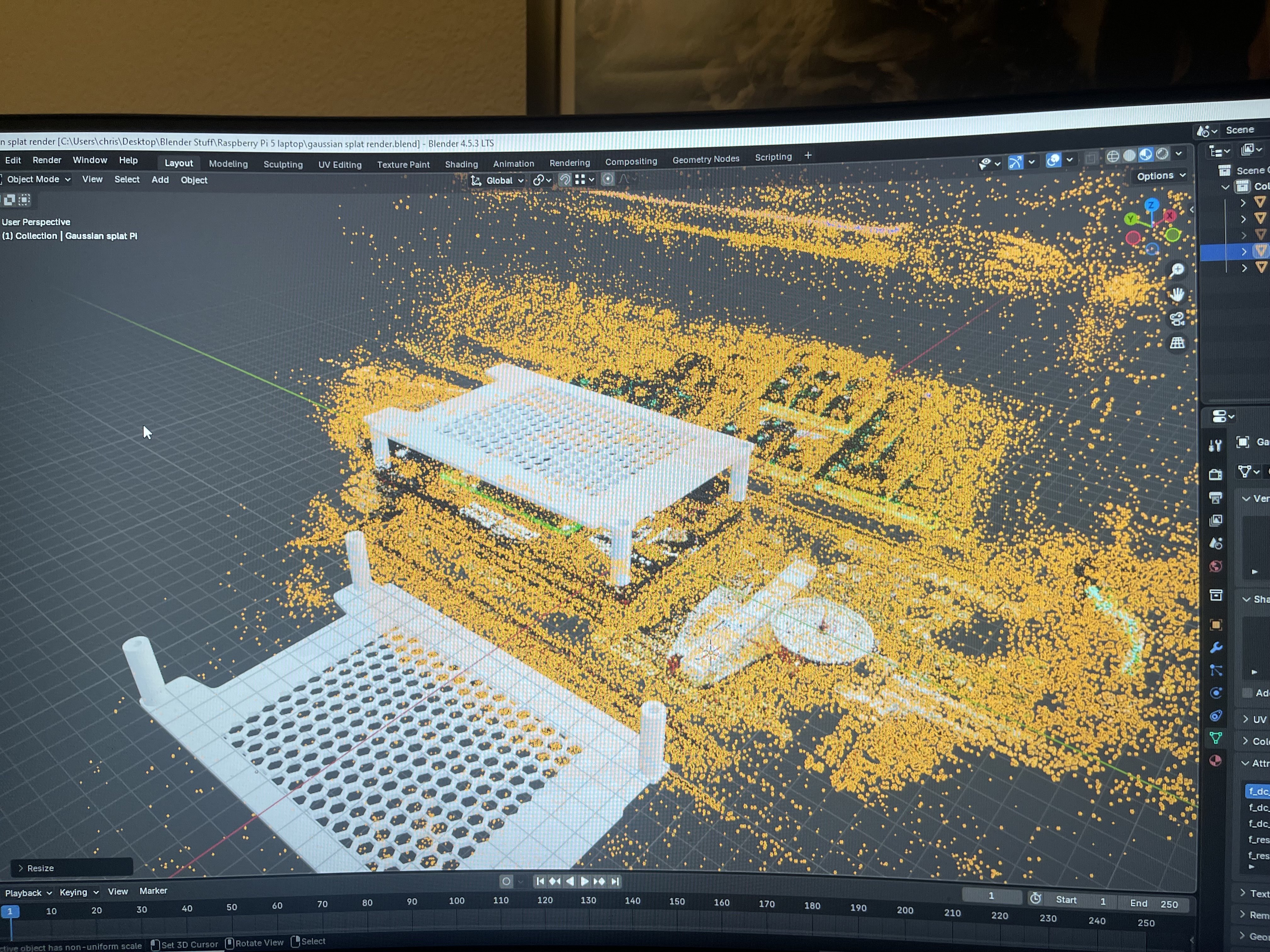
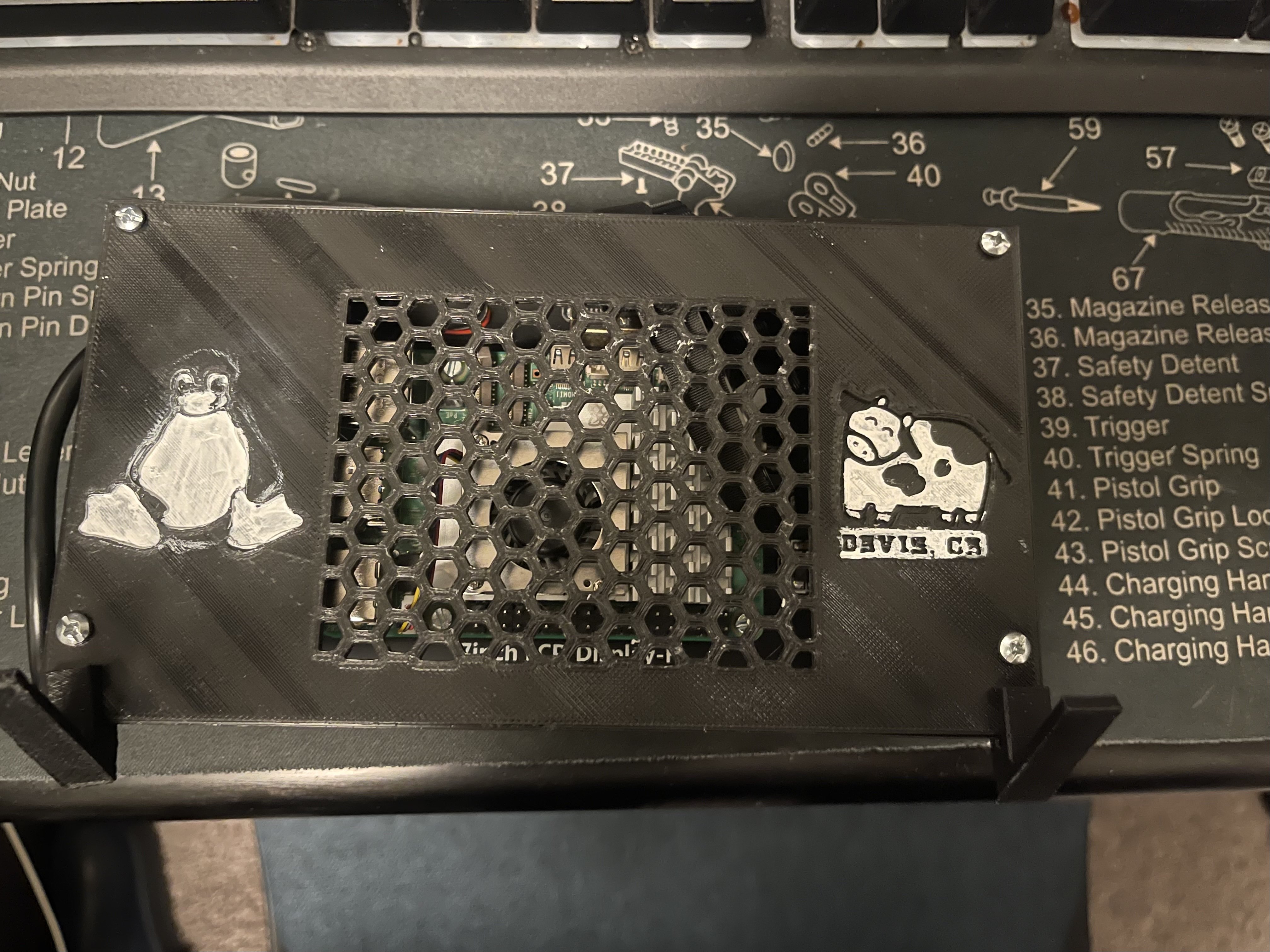
After printing, the back-plate successfully screwed into the LCD screen via its mounting points. While analyzing the scene in Blender, I reduced the hexagonal grid to only expose the Raspberry Pi, and I used the extra space to embed designs into the plate (see below).
ArcGIS & Blender
Processed NASA datasets in ArcGIS to create a topographic map of Taiwan in Blender, cutting its borders using a geographic coordinate mask. In the future, I plan to create a world map out of wood by cutting out each country's geographic map.
Other Projects / Works in Progress
Independent Manufacturing
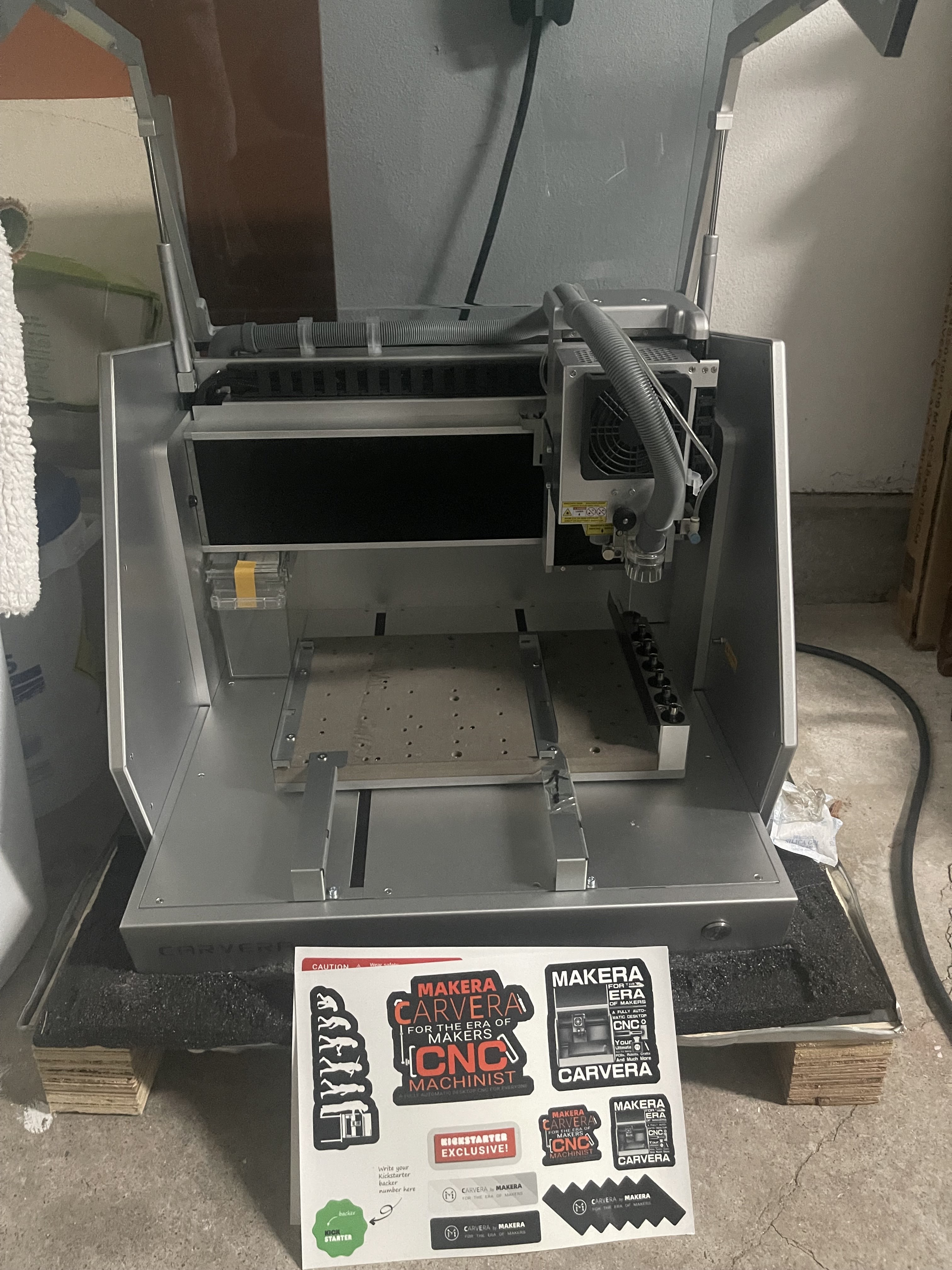
In addition to my Ender-3 3D printer that I've had since high school (2018), I recently invested in a desktop CNC machine to begin working on more advanced projects.
Computer-Vision Projects
Creating augmented data pipelines for 3D and 2D scenes to create my own datasets for computer-vision models. Trying to get into game development to experiment with simulating self-driving cars and drone navigation.
Creative Pursuits
Trying to also get into video editing and learning to draw.