Robotic Hand
UC San Diego PHYS 133 — Laboratory Projects
March 2022
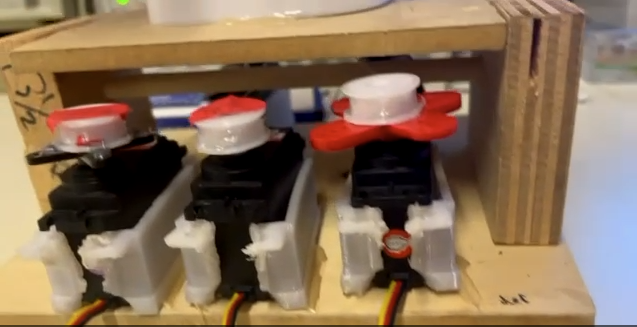
Winter quarter (early 2022) at UCSD suffered from a sudden covid shutdown, delaying in-person learning by five out of the ten weeks we had in the quarter. In PHYS 133, my Laboratory Projects course, I paired up with a partner to design and execute a remote-controlled 3D-printed hand. Each finger was independently articulated and controlled by fishing-wire tendons connected to a servo motor.
The hand model itself was sourced online as a free, solid STL file. Each finger and joint was separated in Blender, and internal channels were cut out to allow the fishing wire to connect to the finger tips and naturally flex each finger. To reduce complexity, springs were inserted to serve as extensor muscles, returning the hand to a relaxed state when the servo motors relax their tendons.
While the design is simple and movement of each finger is constrained to a set path, I am still proud of this project as it was completed under severe time constraints and access to the labs was frequently disrupted throughout the quarter. If I could expand on this project, I would add more degrees of freedom for each finger to move in, enabling the hand to begin serving practical uses like holding objects.
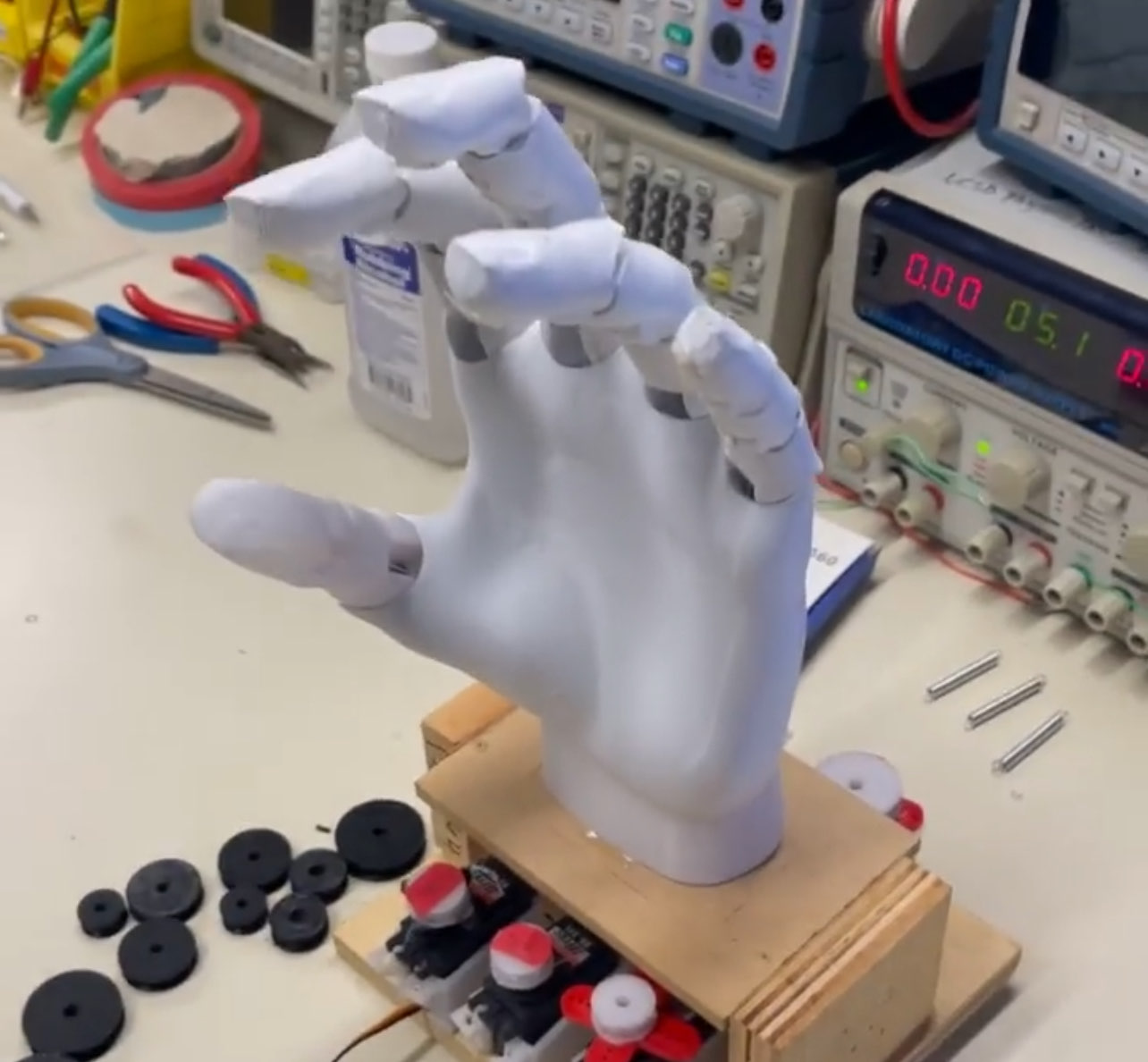
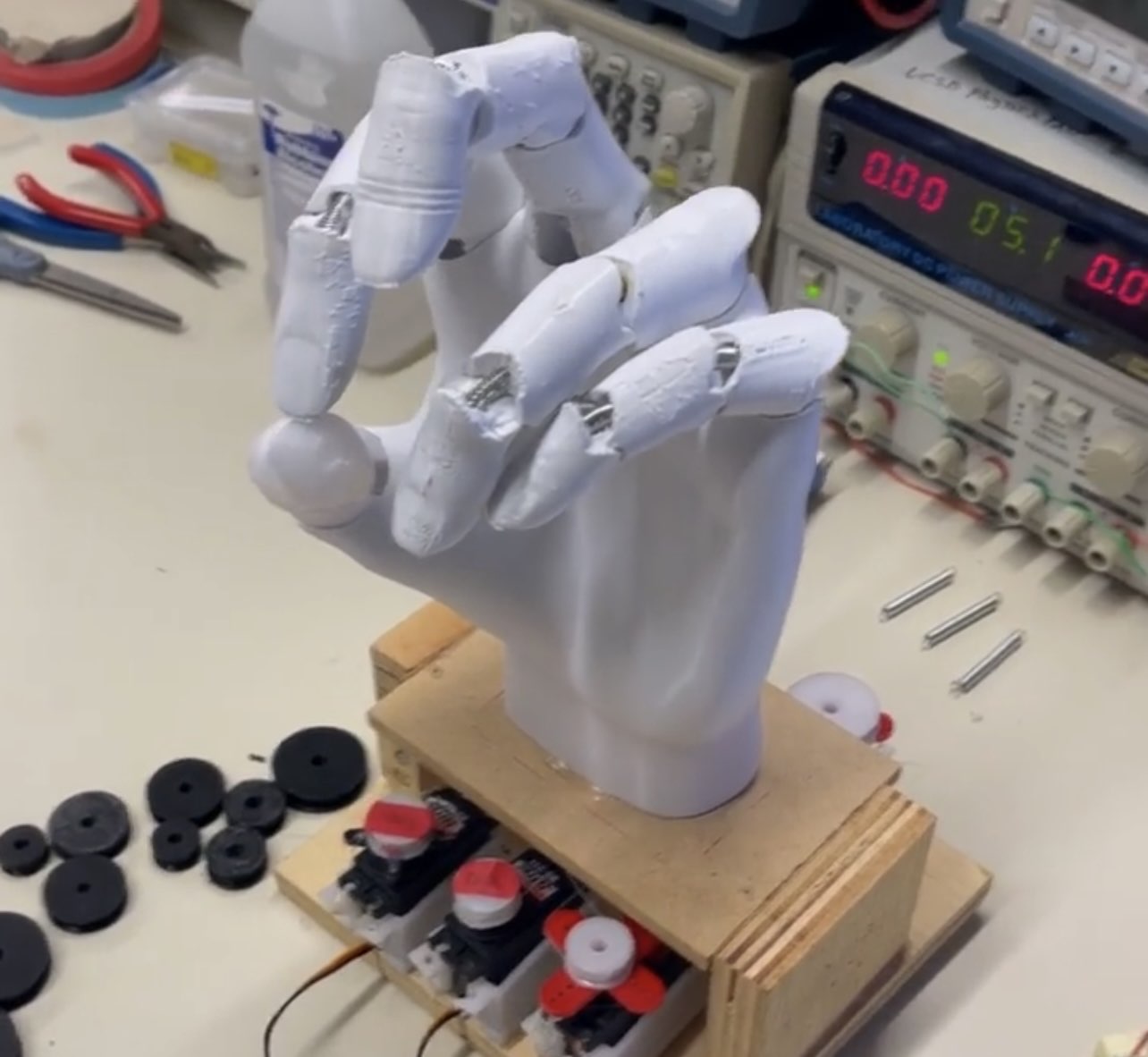
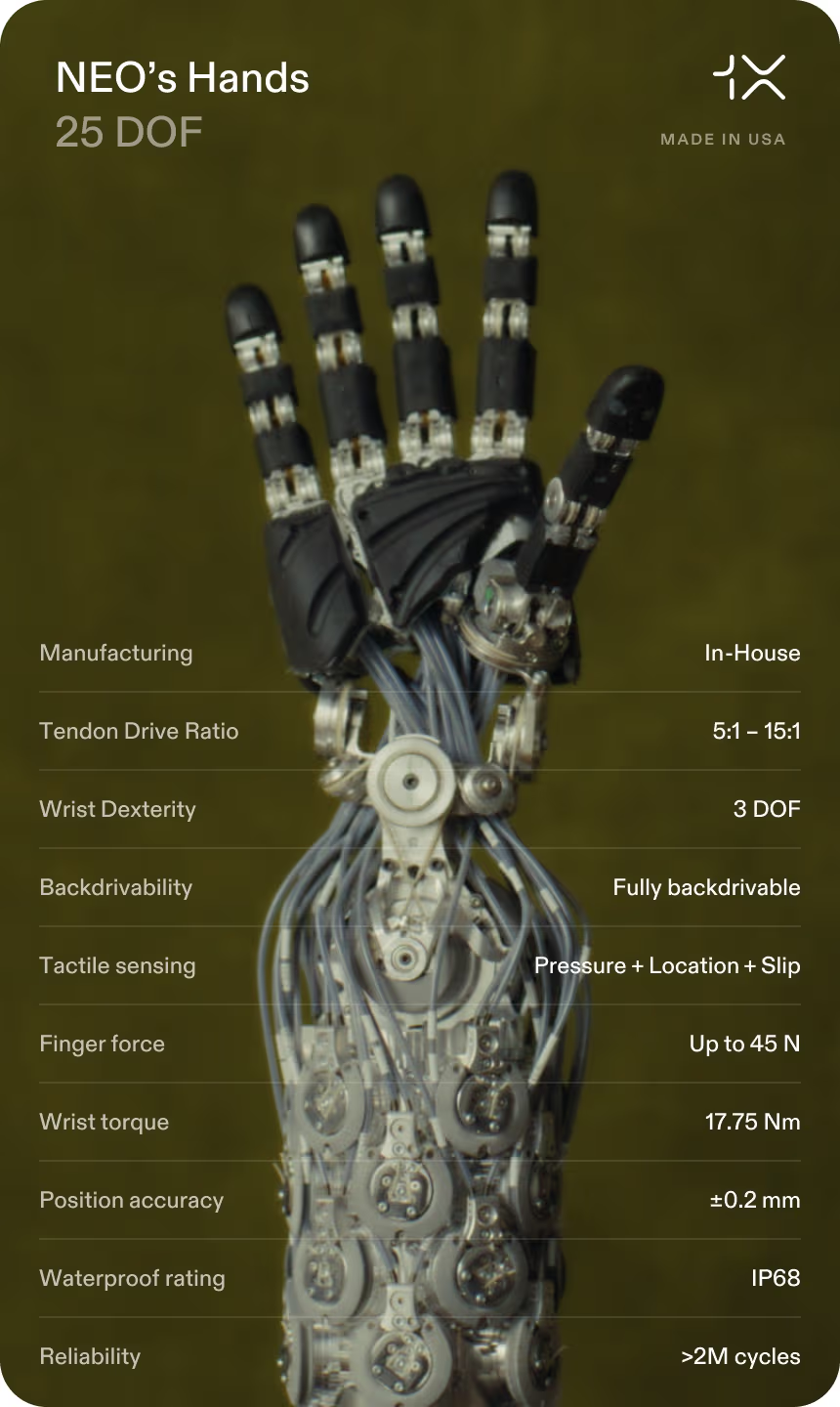
Currently, at the frontier of robotics, the robot "Neo" utilizes tendon-driven hands with 25 degrees of freedom (shown below).
Design Challenges
- No bearings were used. Each joint was cut spherically to enable smooth sliding in place.
- The recommended flex sensors used were better suited for continuous flex rather than tracking "sharp" flexes localized around the joints. This resulted in the control glove (seen below) not functioning when properly worn (but still working as a controller).
- Custom 3D-printed spools were created to allow each servo to share a common minimum and maximum flex position. The spools compensated for each finger's path-length difference at its minimum and maximum flexed positions.
- The flex sensors often provided unreliable analog readings, so average values were sampled before servo positions were updated.
- An extension goal of making the controller wireless was almost achieved, but the Bluetooth modules failed to pair before presentation. The wireless glove was able to successfully communicate with the motor controller and generate live movement in prior testing.